Tags
Mother’s Day in the Garden
10 Thursday May 2012
Tags
08 Tuesday May 2012
Posted in companion planting, roses, squash, tomatoes, Uncategorized, vegetables
Tags
borage, companion planting, gardening, garlic, roses, squash, vegetables
My mother sent me notes she’d photocopied from a Garden Club lecture she went to about fifty years ago. The title “Strange Bedfellows,” sounded oddly like a Dickens novel or an episode of Mad Men. Typed, single spaced and on legal paper, it was written by a woman named Jean Hersey, whom she does not know or remember.
I skimmed the first paragraph quickly, knowing my mother would ask me right away if I’d read it.
“Symbiosis is the harmonious living together of two species of organisms for the mutual benefit of both.”
Skimming again, impatient, I read: “Plant garlic in your roses.”
My mother, who was note-taking during the lecture, wrote in the margins: “My grandmother knew this.”
Apparently, the garlic may stop mildew on roses. Enough said, I folded it up and put it somewhere to read it later. I am always fighting mildew and since I don’t like to use pesticides, I thought this might be useful. I would read it one day, when I had time, better eye-sight and a longer attention span. However, I did have time to plant garlic. I ran to the garage and found a package that I’d been meaning to grow. I opened it, thinking how funny it was to plant a whole bulb.
“Do I plant the whole bulb?” I asked my husband who grunted, “No idea.”
It seemed so much like the garlic in my kitchen. I wasn’t sure if it was worth it to plant a bulb, but it was for the roses, I reminded myself. So I did.
Later that day, my best friend called from Huntington Beach. She was parked outside Home Depot. “I can’t find garlic sprouts, and I’m buying them for my roses.”
Get out! The very same thing? Cosmic coincidence? Mind meld? Did my mother send her the same long article?
“It’s a bulb,” I said. “I just planted some. You can’t buy the sprouts. You didn’t get an article from my mother did you?”
Turns out she didn’t. She was fighting the mildew on her roses, too. I told her I tried to ignore the mildew on my roses, because it didn’t seem to hurt them. (My mother’s solution was to take a Q-tip with alcohol out there and wipe them all down. Now that’s a lot of work. I wonder if wine, counts, because there is a possibility I could do that while enjoying a glass.)
Anyway, my girlfriend called me a day later, and she was really getting into “companion planting.” She was planting squash with her corn and basil with her tomatoes. She had called her husband’s cousin who was a Master Gardener and she’d told her to read this web site: http://sally-odum.suite101.com/organic-pest-control-and-pesticide-a4337 and http://www.ghorganics.com/page2.html. (I really like this one!)
And when I started thinking about planting things for mutual benefit. I thought, hmmm, this reminds me of my friend. Yes, funny that I can find a metaphor in just about anything. Funny that she was planting garlic in roses when I was. There is something significant about that coincidence. Let me tell you…we have been friends since before I was born. Yep. That’s right. She is nine months older than I am. Our mothers lived across the street. That means when she was one, I was three months old inside my mother. That’s how we knew each other before birth. Maybe I heard her babbling while I was growing in there, my mother sharing coffee with hers, or maybe trading plant cuttings or recipes—all things they still do today. Then I was born, and we were often put in the same crib.
Forty years later, we’re still friends sharing things and helping each other. If I am oregano, she is tomato. If she is borage, then I am a strawberry. She’s beans, I’m corn. You see, we are like companion plants—her often openness complements my reluctance; her emotions contrast to my stoicism; often she calms the rant; then she rants and I calm. We alternate moods and emotions depending on the problem or the need. We’ve both been irrational and reasonable; sympathetic and outraged, talkative and silent — forty years of companionship through school, college, jobs, marriages, illness, divorce, death, childbirth and child rearing, parents growing in years, moving, house buying, house remodeling and gardening; two growing things have never been as mutually beneficial.
So thank you, friend. I am so lucky to have you as a companion.
Now that my tribute to this friendship is over, and I will get to a summary of Jean Hersey’s points—I finally read the entire article and summarized it for you.
• Lavender and scotch broom: Here’s a picture of scotch broom.
• Dandelions. “You may scorn them in the lawn, but please appreciate them for one marvelous characteristic–at sunset they exude an ethylene gas which causes flowers and fruits in the near vicinity to ripen ahead of time.”
• Grapes benefit from nearby plantings of hyssop and wild mustard.
• Strawberries like to grow near spruce trees.
• Bush beans lettuce and spinach are good companions; borage is also good and good with strawberries.
• Never grow cabbage next to strawberries.
• Tomatoes–parsley and asparagus are great; stinging nettle (!) keeps them mold free and sweetens the tomato pulp.
• Never plant tomato with fennel.
• Radishes are good near cucumbers and ward off cucumber beetles. Cucumbers also help corn.
• Most pumpkins or squash and corn and legumes (such as beans) are all good companions.
• Carrots, peas and lettuce are all good for each other are all good together.
• Potatoes and sunflower stunt each other.
• Nasturtiums are good with apple trees and are said to influence the sap and make it taste bad to aphids
• Hang pennyroyal on fig trees to keep flying bugs away.
• Mint repels ants. And since ants carry aphids and that horrible soot and therefore attracting that white scale, I am going to plant a lot of mint this summer. And my favorite one:
• Plant a white geranium among your roses to keep the beetles away: “They [the white geraniums] attract Japanese beetles which eat the geraniums and die. You can also collect Japanese Beatles and pill bugs in traps, burn them and scatter their ashes over nearby vegetation.”
Now that is one kick ass garden club lady! Go Jean!
27 Friday Apr 2012
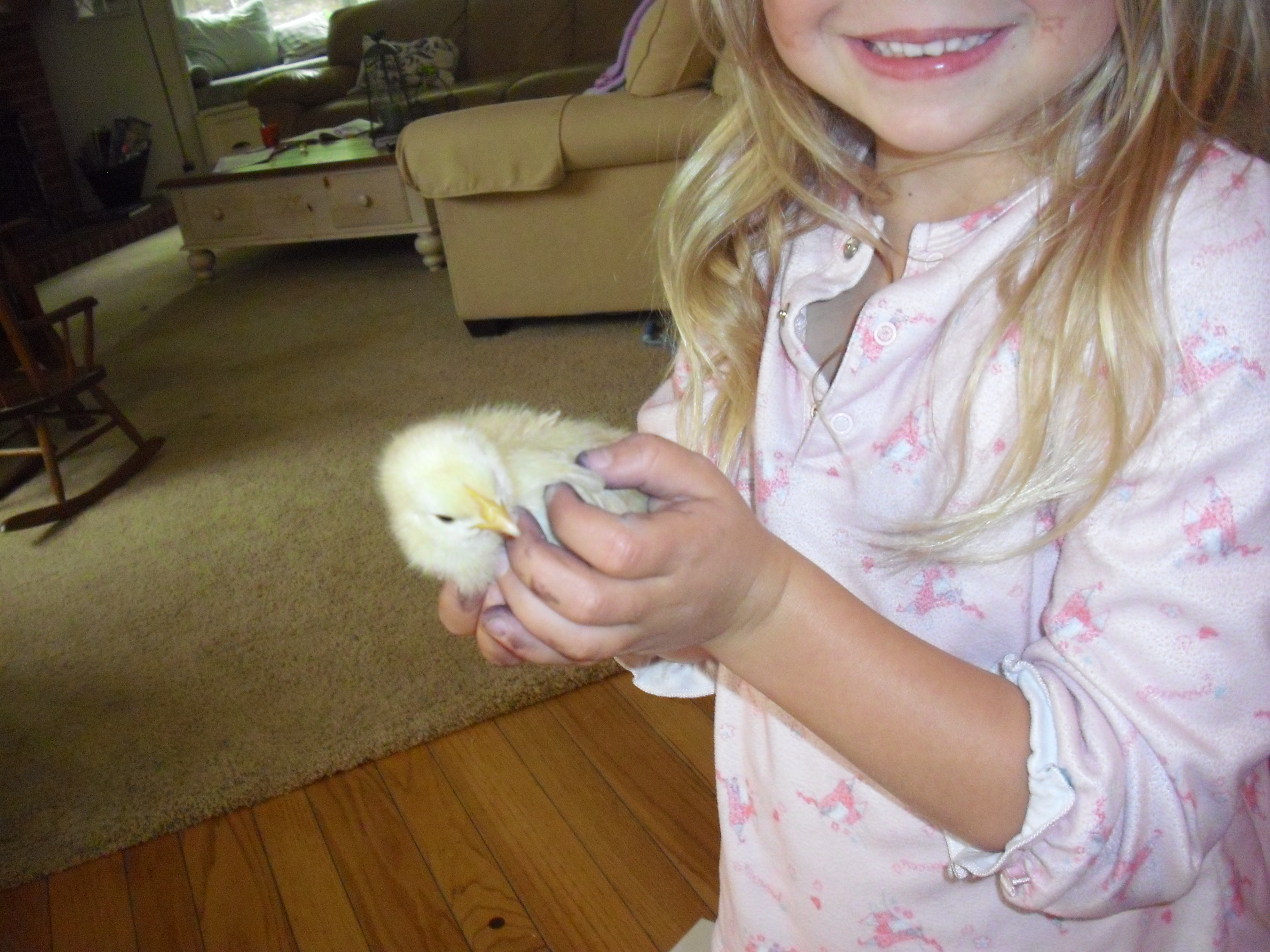
Does it seem like everyone you know has chickens these days? At least here in our community, which is very urban, very beachy, very chicken-y—the answer is –you guessed it, Yes. Chickens are trendy right now. Very trendy. Not one to miss out, I have three little chicks too.
When I told my father, who grew up on a ranch, he said “*$!!$#, why did you do that?” He ranted for a long time something like ….
“I cleaned chicken poop from chicken coops from the time I was three until I was 16. They are the dirtiest, dumbest animals ever.”
Really, Dad, you cleaned coops at the age of three?
Did I mention he was a rancher?
Growing up, I never remember having chickens on our ranch or our farm. Okay, maybe one time, one cowboy had some, but they didn’t last long. I remember a pig. A giant, muddy pig that I was scared of. I remember a Texas longhorn cow with brass doorknobs on the tips of her six-foot long horns. I remember lots of big red quarter horses.
I remember kittens.
Calves.
Cattle dogs.
A donkey.
Never chickens.
Or sheep (which is like a swear word to most ranchers) Or goats (Boy, did I want a goat. I still do.)
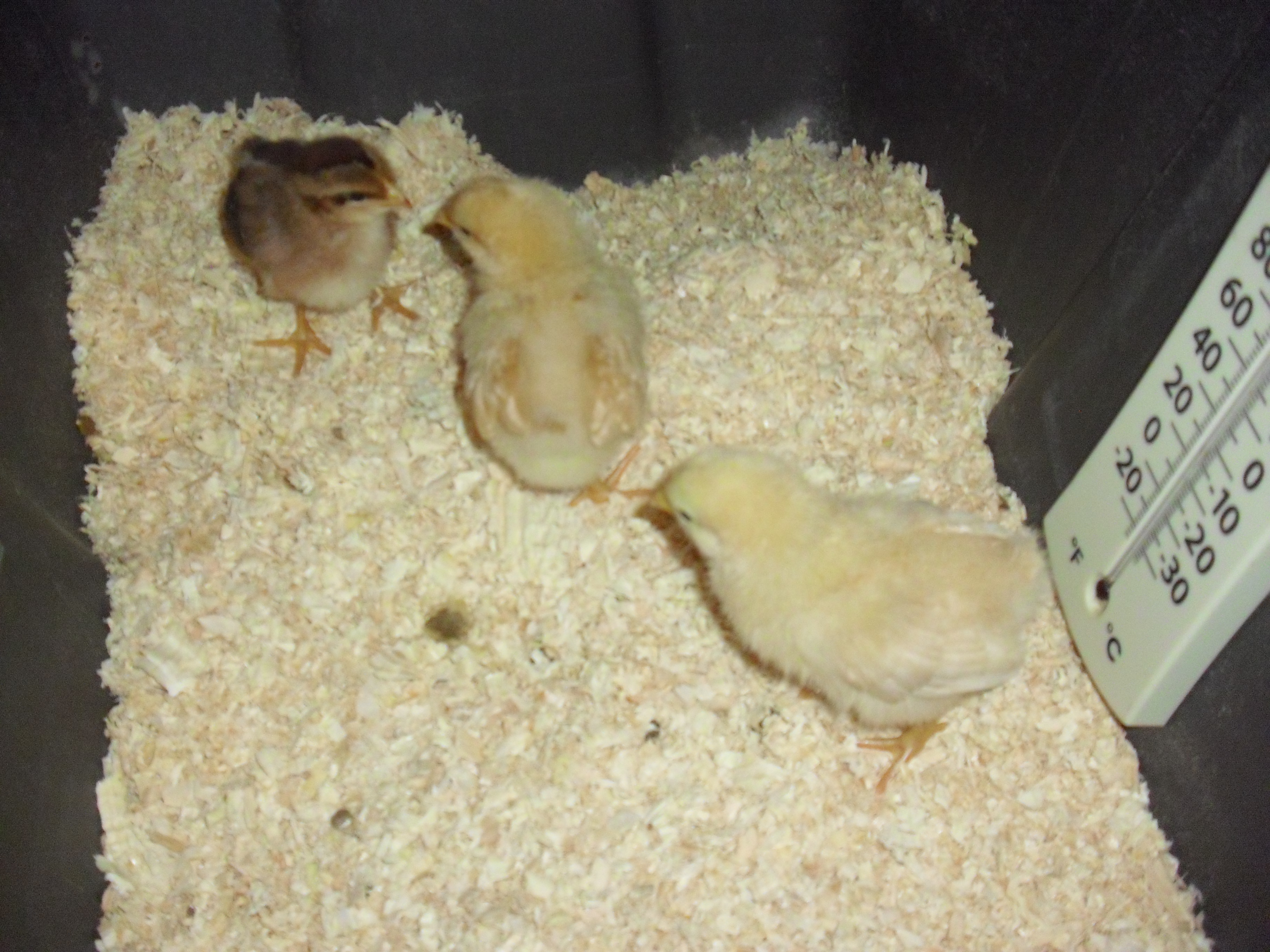
Did I mention that my chicks are the cutest, sweetest things? I don’t care if they are dumb. I think they like me. They look at me when I talk to them; they know my voice and start peeping. They are cute even if they are losing all their down and look like little teenage messes, little punk-rock chickens, chickens that went through a dryer.
Every morning, I try to spy on them. I creep over to the door in the room where they are living in a giant plastic bin with chicken wire on the top, and I try to catch them off guard. At first as I watch, they chase each other around, they stretch their nascent wings, they stand on the water dish. Then they spy me, freeze, and start peeping.
“Hello! Hello! Hello!” I imagine them saying. “Let us out of here, we want to stretch. We want to dig up your garden. We want to parade around the yard.”
Hmm. Wonder what my Australian Shepherd will think of that? He already tried to eat one — even in his feeble, arthritic state. He watched innocently as my daughters held the chicks, and Whomp! Chomp! He tried to grab one. A lot of women started screaming. I had two grandmas here. Two little girls. Everyone started hollering at my dog, and they kicked him out of the house. Hopefully, he learned his lesson. He is very sensitive. 
My mother who is from a large farming family in Ohio, said her grandmother loved her chickens. She sent her daughter to college on chicken egg money. (Don’t think my chicken eggs will pay for college these days.)
Her “little grandma” she called her as if being short had something to do with caring for chickens.
Mother seems excited for chickens, but worried too. She worries about almost everything. Now she is worried that I will kill the chickens.
Hey, mom, they lived in my office for the first week. I had conference calls with peeping chicks.
“I can hear them,” my employee said when we spoke on the phone. “Clients will think you are peeping.”
Gee. I moved them, okay? Now I can walk up and spy.
“Honey, hurry up and build the chicken coop,” I say to my husband each morning when I see how much they’ve grown overnight. Just like a baby, they grow while sleeping. (I really want a chicken coop that looks like a gypsy wagon, but I don’t think he’s willing to have that in our yard.)
Anyway, I wonder what sociologists will say years from now when they study urban farming trends in 2012. Will they say we were misguided? A chicken only lays eggs for two or three years, the book says. What will happen to all the old chickens of Point Loma? We can’t set them free by the sea shore. I certainly don’t want to eat mine when they are old. Will people relinquish them to the dog pound?
Will social scientists say this urban chicken farming trend was a yearning for a simpler life? A reaction to these tough recessionary years? Nostalgia? Most people I know get chickens once their kids reach a more independent age. That’s a weird one to think about!
It definitely seems to be fulfilling a need — the way growing flowers or vegetables meets a need to actually produce something tangible, to make something real—not a spreadsheet or a blog, but something you can touch and hold—or eat.
I think it’s fascinating how many people are getting chickens—me included.
20 Friday Apr 2012
Posted in roses, Uncategorized
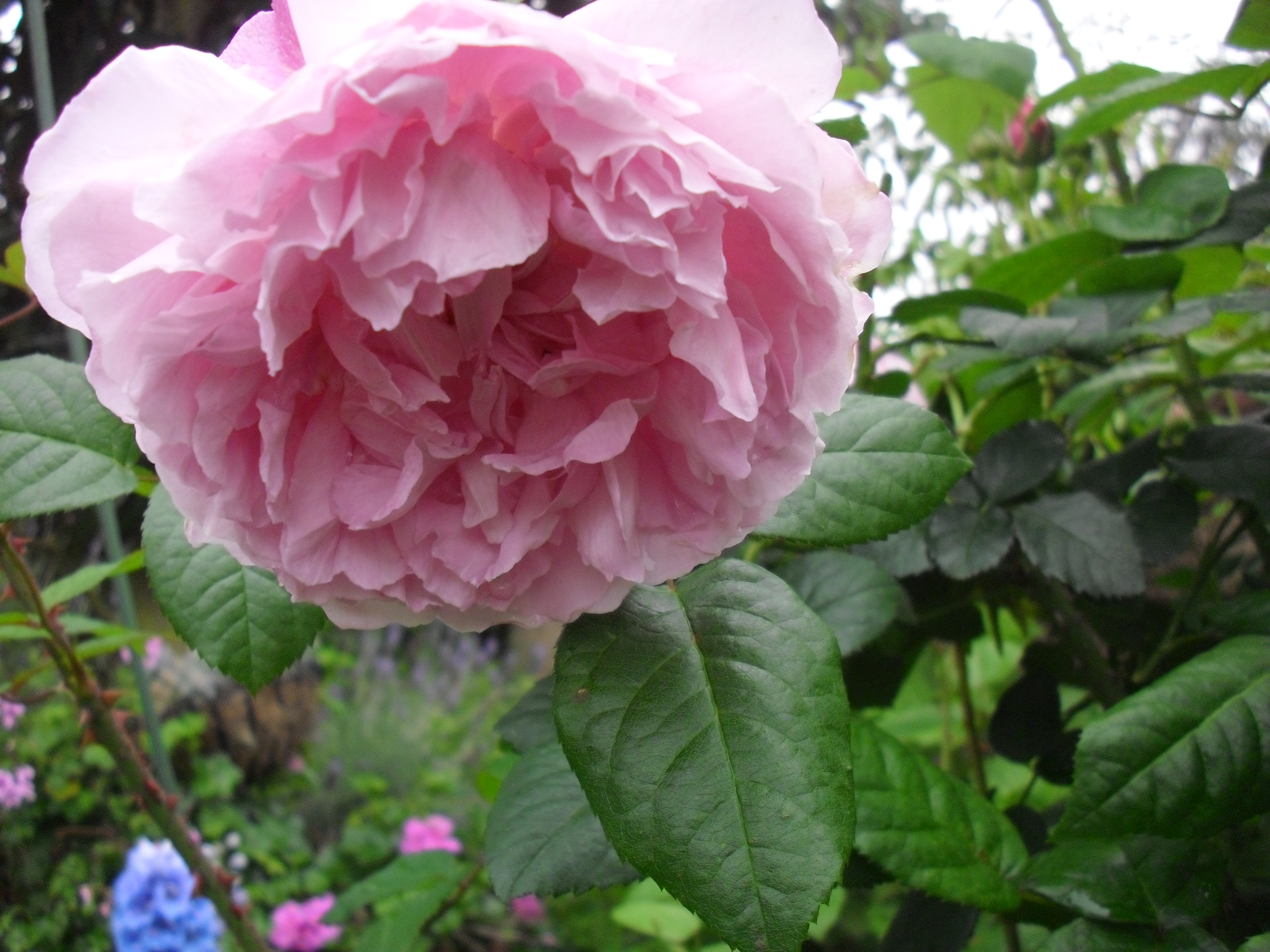
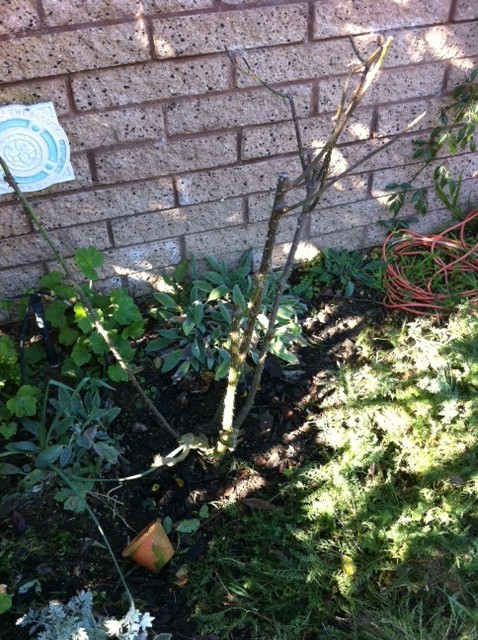
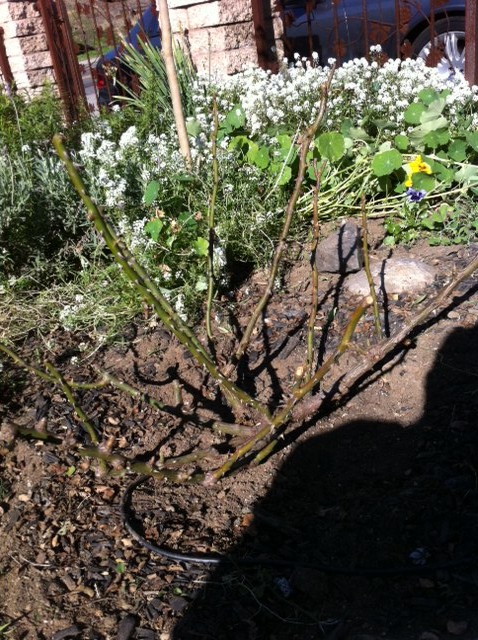
I was worried that I pruned too much. See the Mary Rose below after I pruned it this January. But now it is blooming and full of leaves. See it at right and below. Roses are miraculous plants. They loved being pruned.
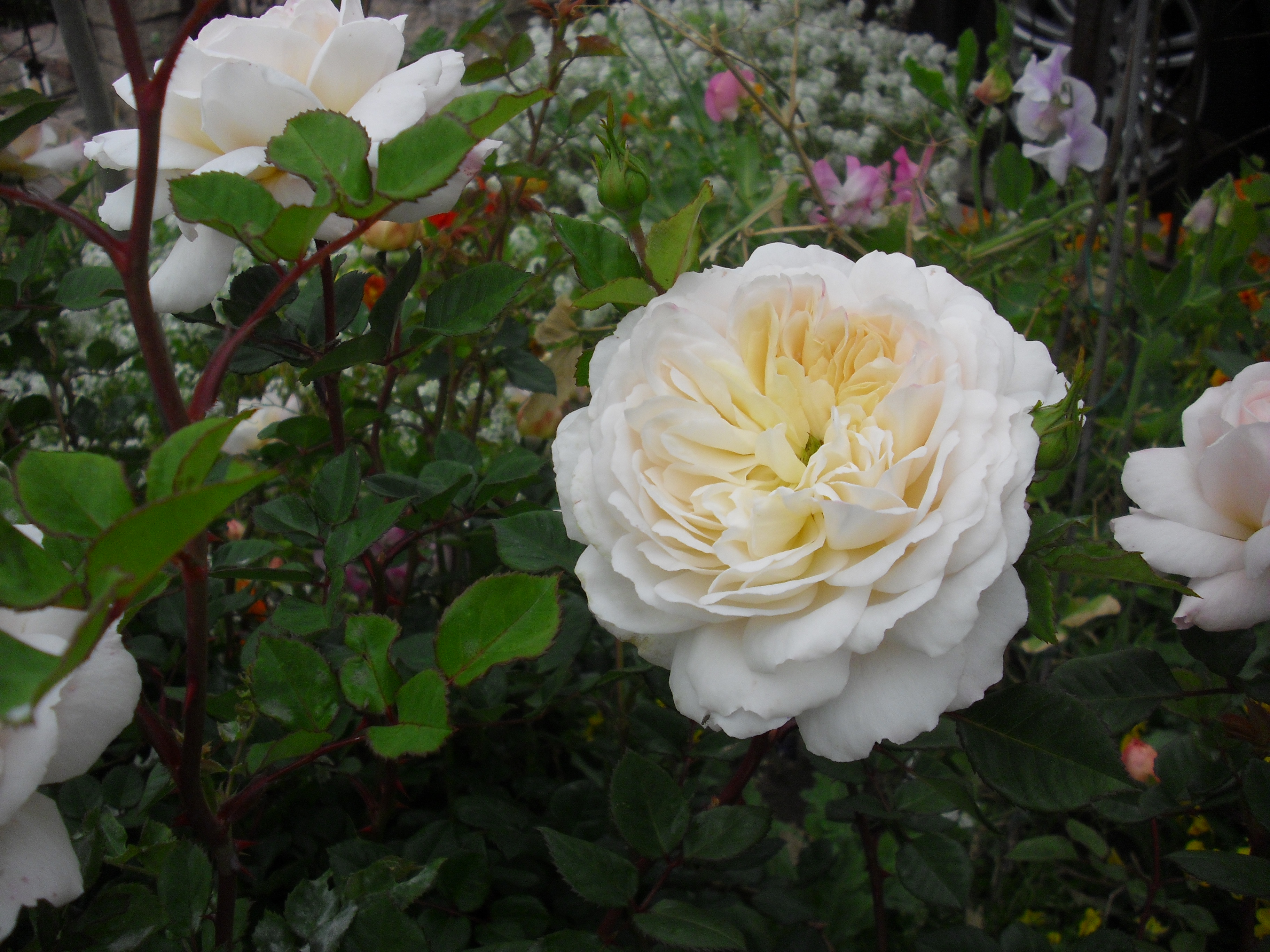
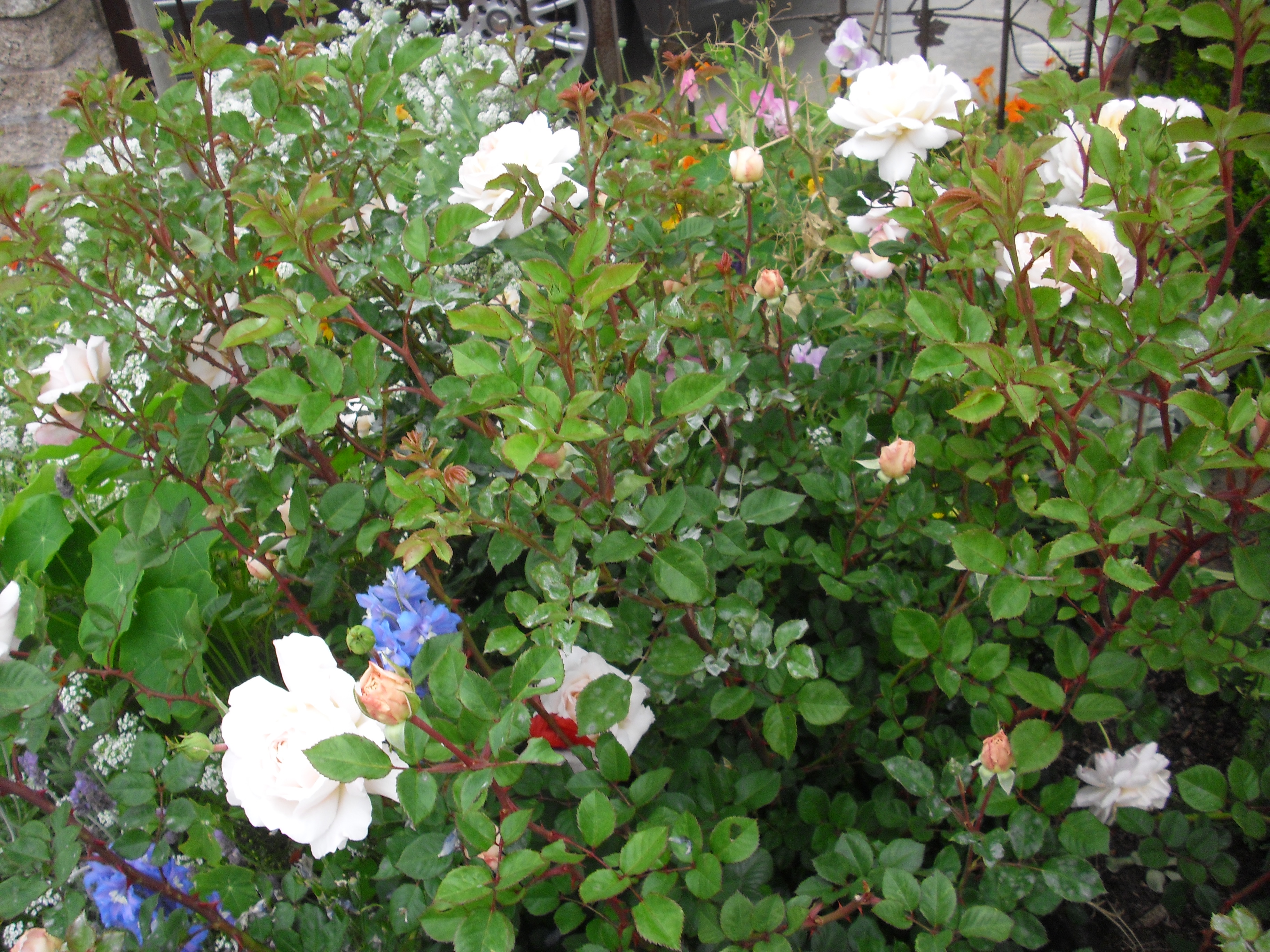
The Crocus Rose is huge already. Much larger than last year. I can’t keep up with cutting it and making bouquets. Here is its before and after picture:
12 Thursday Apr 2012
Posted in Botanical Garden, butterfly garden, butterly, drought-tolerant, garden, gardening, Tucson, Uncategorized
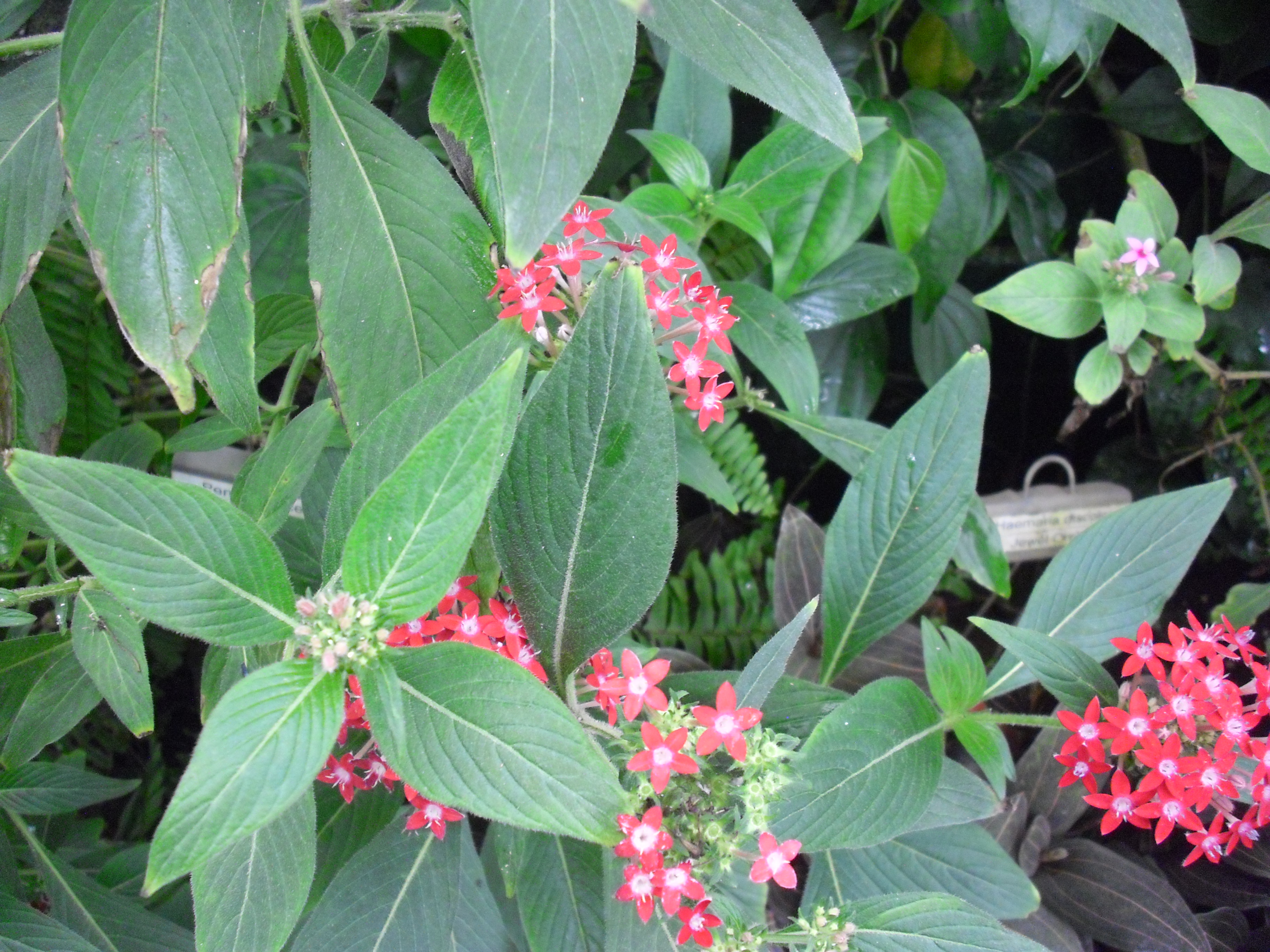
I love visiting other gardens and getting ideas. Last week I went to the Tucson Botanical Gardens and the butterfly green house. It was amazing. The greenhouse was full of plants that grow in San Diego such as hibiscus and Pentas lanceolata, which was beautiful. I might try to plant it. I see it grows as a perennial here and as an annual other locales.
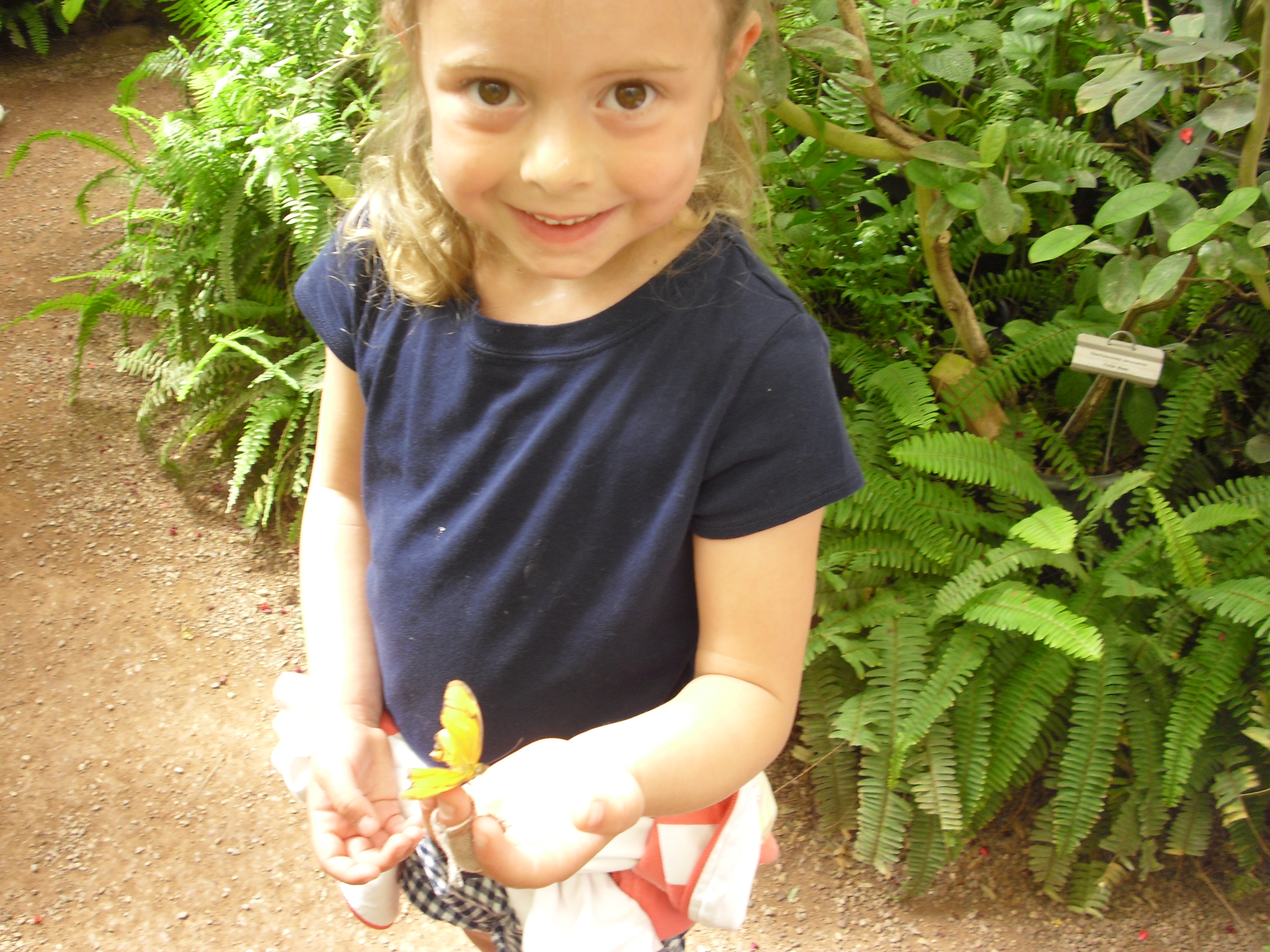
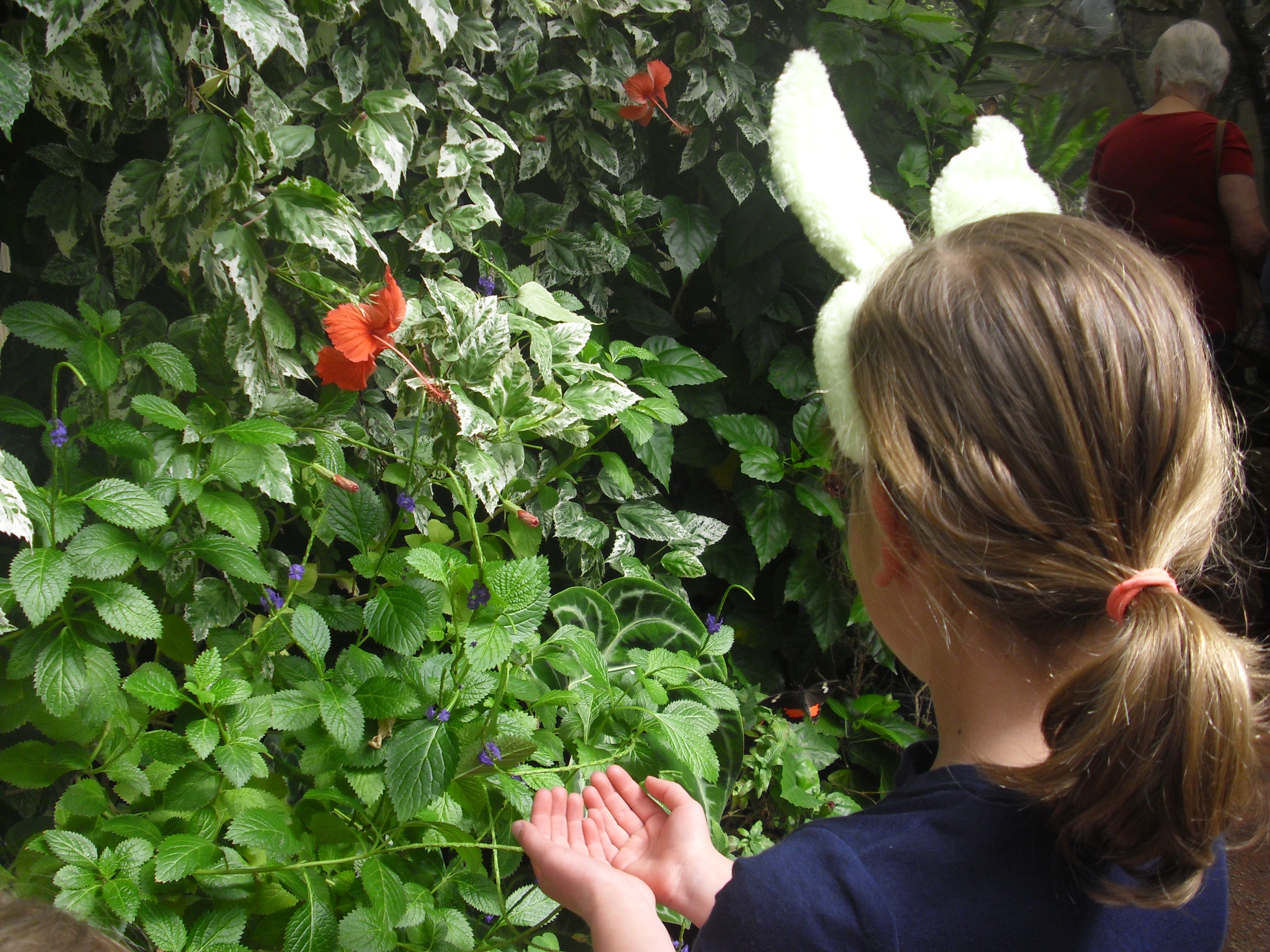
I had some little garden helpers with me on the tour. The butterflies were attracted to them.
We really enjoyed the butterfly house, but there was so much more to see. So many of the plants both inside the 80 degree green house and outside the butterfly house, can grow in San Diego. That’s what so amazing about the climate here. We can grow almost anything.
But here is a shady fountain that they have planted and turned into a flowerbed. I think that’s Dusty Miller, which, I am surprised to learn, is a type of Artemisia. I don’t usually like Dusty Miller, but I love my Artemisia Powis Castle. I am not so great at growing it, but I love its smell and its silver gray color. I love all the funny names it has too like Wormwood. I read that is has been grown since “the time of ancient Greece.” (Sunset Western Garden book.) Now that I read this, I see I need to prune it in the fall. Maybe that’s my problem. Anyway, here it is in Tucson:
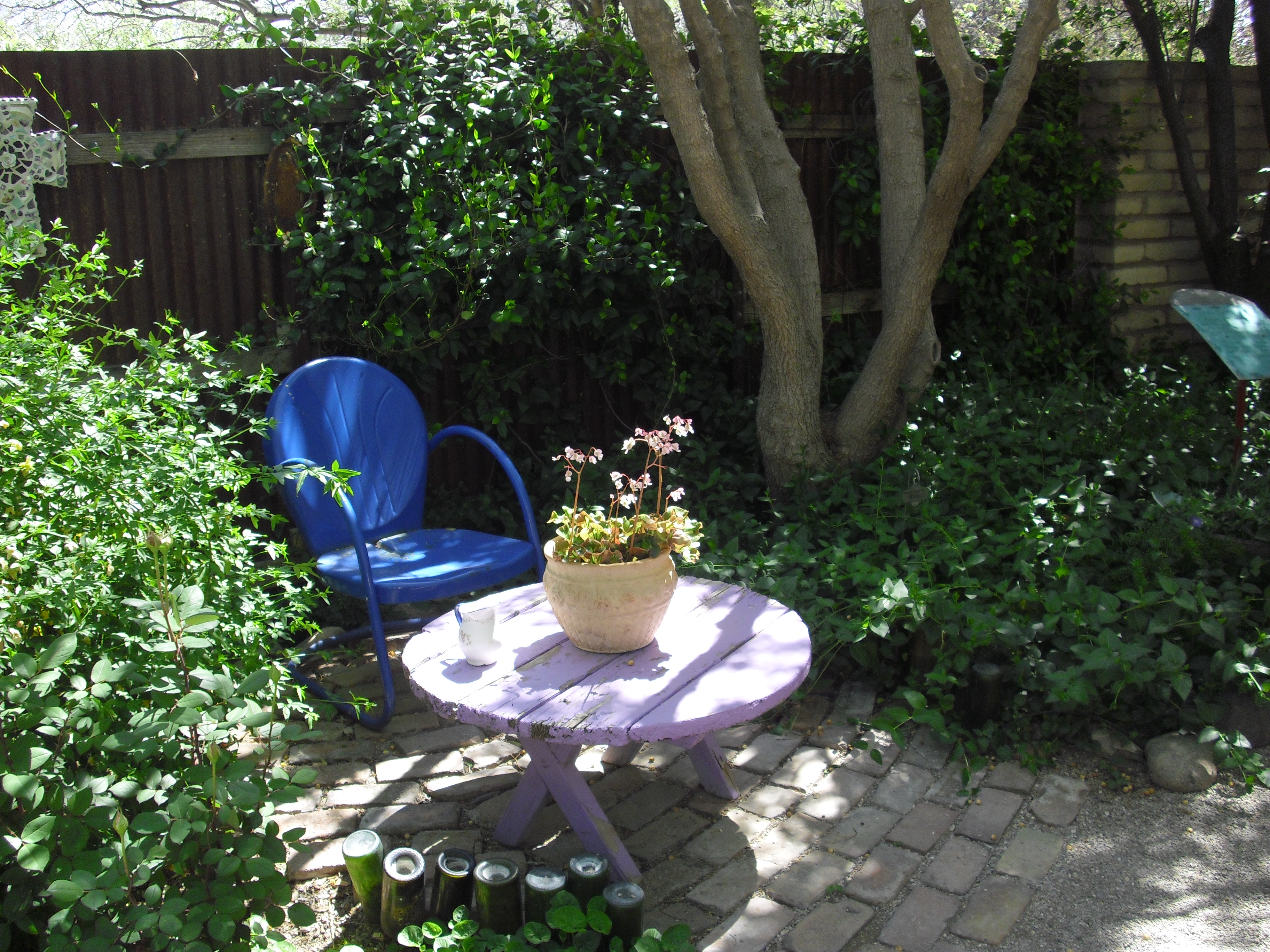
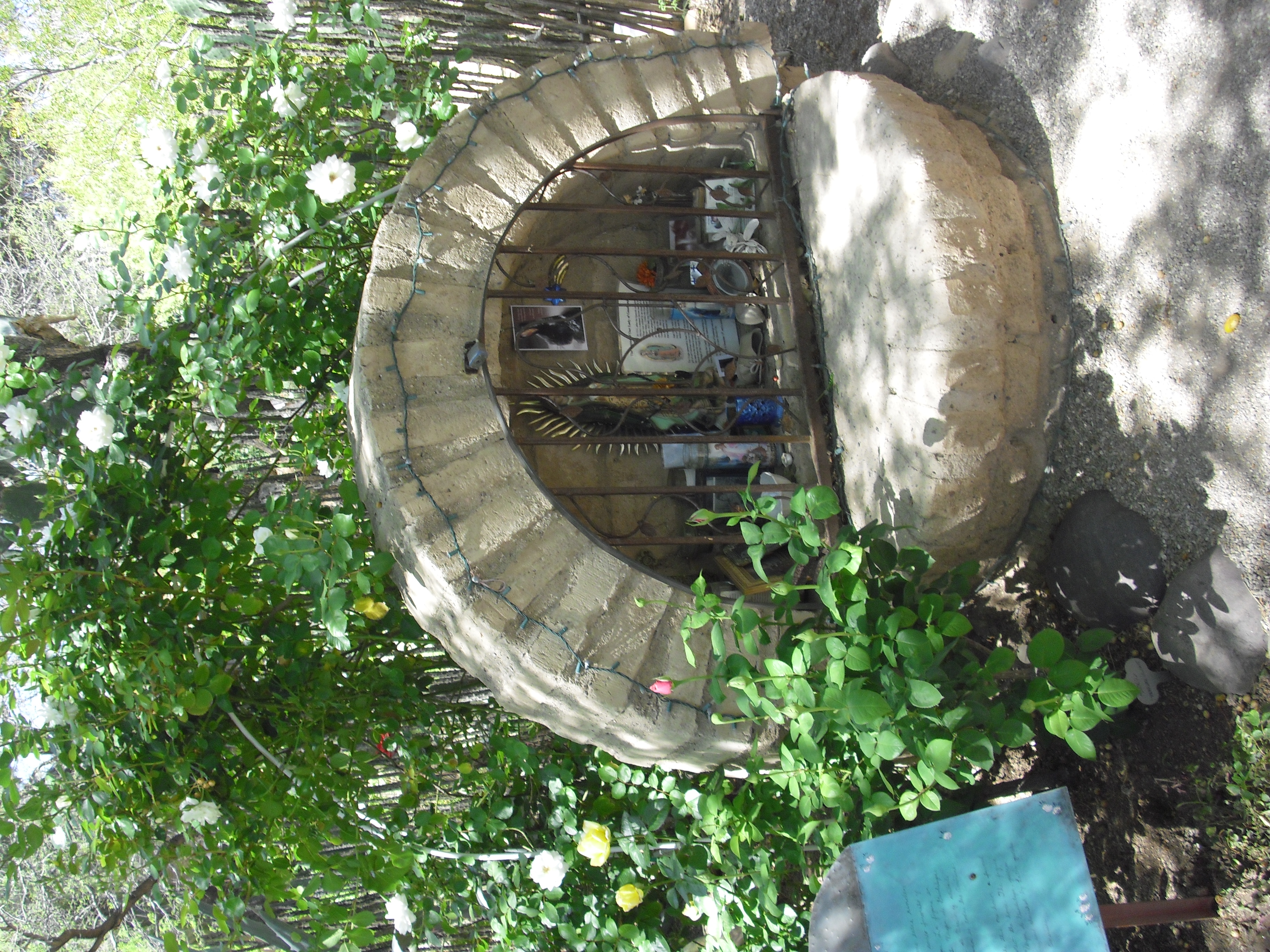
I also loved the Barrio Garden with its roses, fig trees, purple heart (the deep purple houseplant-type that grew profusely in the flowerbeds in the house I grew up in), pomegranates, and tombstone roses. Just beautiful!
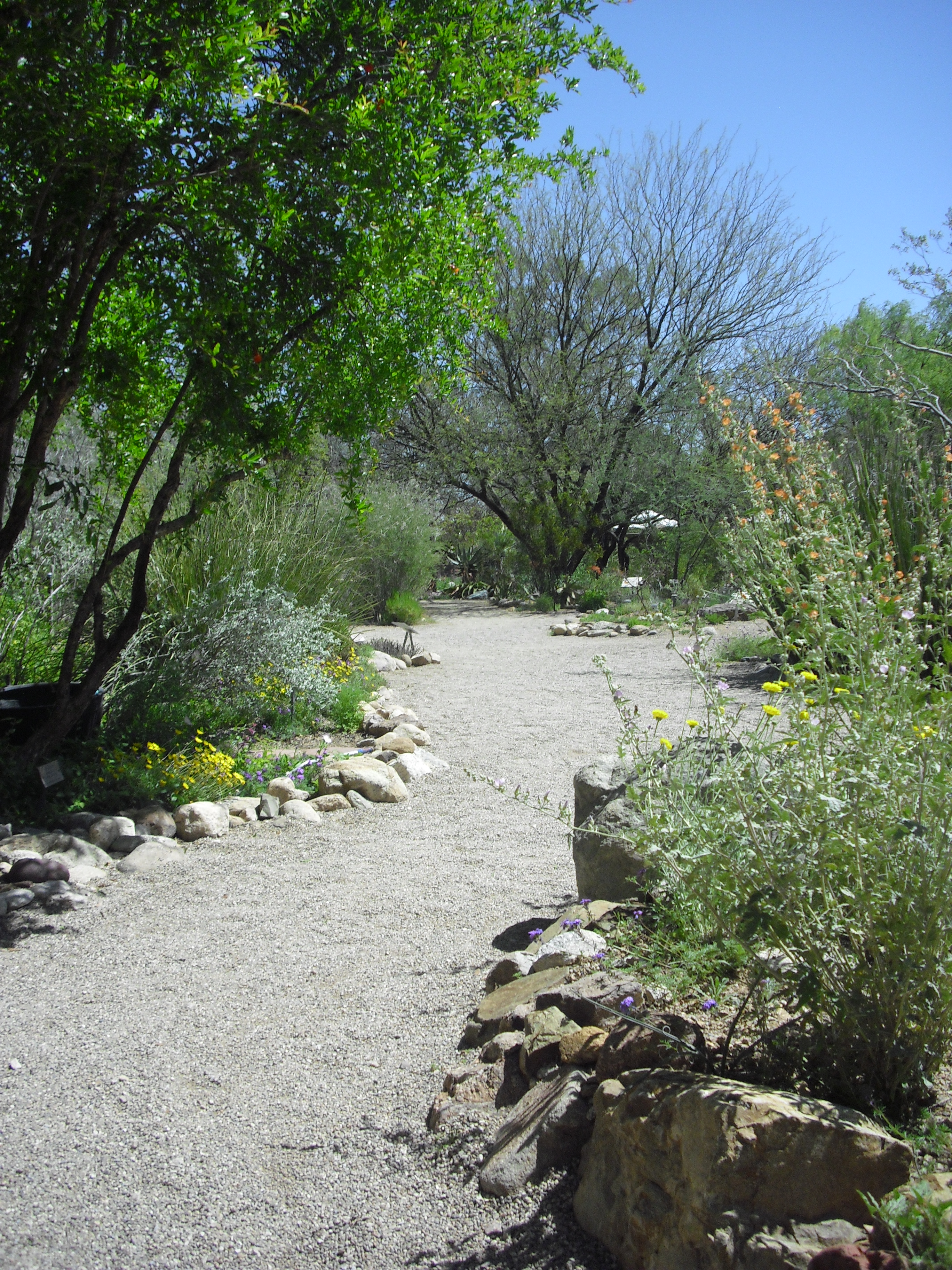
I love the look of this garden path (see below), which is lush and full, despite the heat. This pictures shows a pomegranate, a mesquite and some other flowers in the wildflower garden area. If you are ever in Tucson, be sure to visit this wonderful place!
Of course, March is a wonderful time to visit Tucson. Everything is blooming–the Palo Verde trees are full of yellow blossoms. They float down the street reminding me of buttered popcorn. My great-grandma tried her whole life to paint one that satisfied her with its perfection. The vibrant yellow flowers against the sage green branches made a very compelling subject. Since I don’t paint, I write, and I can write about her trying to paint, but mainly I prefer to watch them because they are full of pollen and make me sneeze! (If I find a picture, I will post it.)
09 Monday Apr 2012
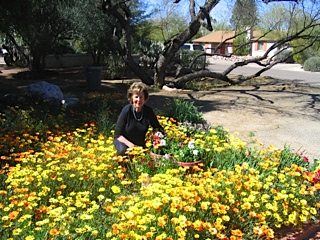
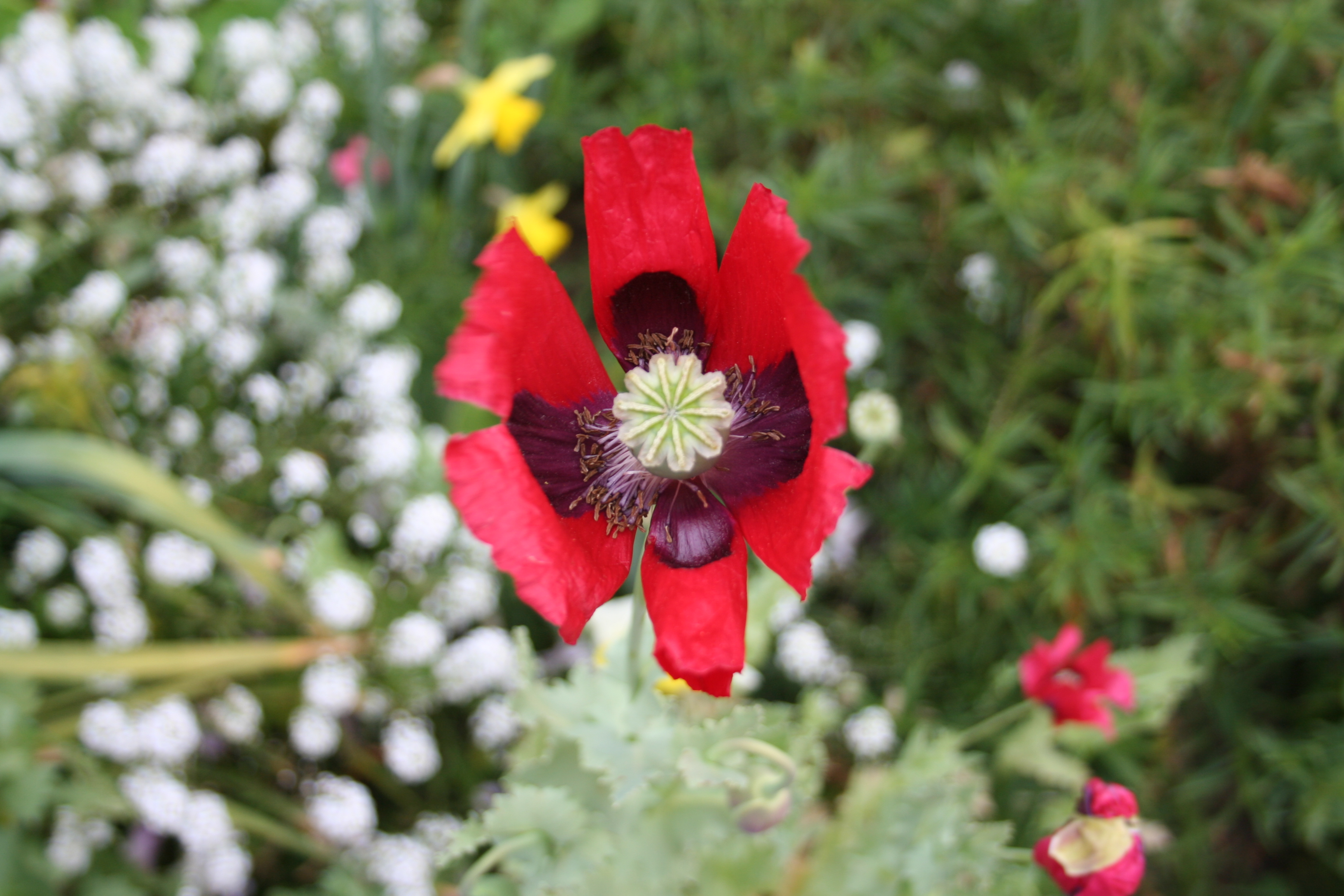
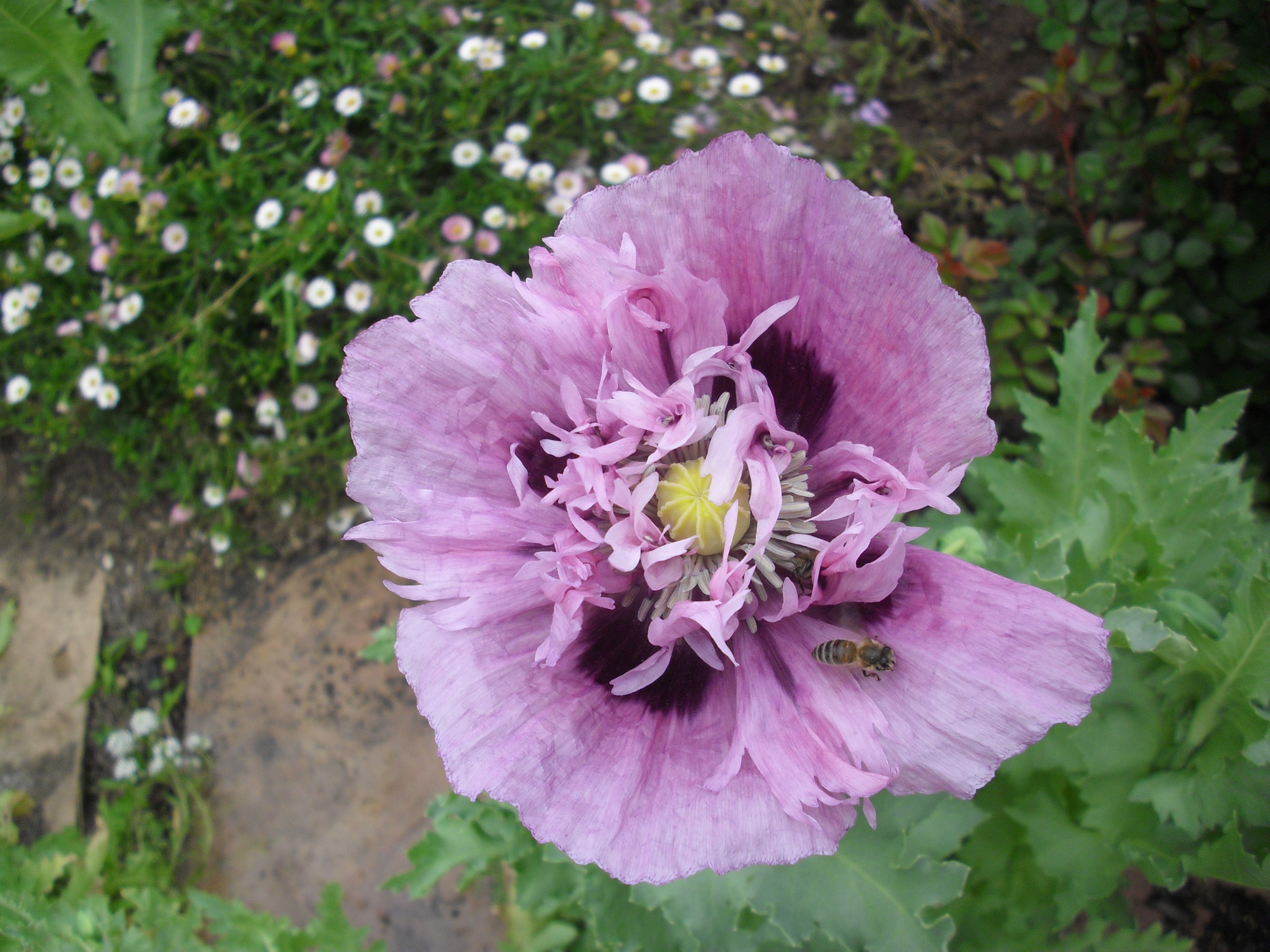
I’ve read all the sexy stuff that people have written about poppies–the opium, the seductive red hues, the Laudium making. Decked out with teasing, luscious fringe and lavish sage green foliage, they are bee-seducing, hypnotic, sleep-inducing (think Wizard of Oz), intoxicating. Yep. They are all that, I guess, but for me, the poppy is forever associated with my dear Mama. Yes, my mama. The number one –the only—person, besides myself, I’ve ever known who grew them. They are part of my ancestor garden, and remind me of her as I hope they will remind my children of me. Below is a picture of my mom in her Arizona garden–here she is photographed with African daisies.
In writing this, I realized I didn’t know where my mother acquired them because she has been growing them as long as I can remember. She racked her brain a minute and told me that she couldn’t really remember but thinks they came from a guest speaker at her Garden Club meeting many years ago. She said she got a little packet of them at the meeting and has planted them ever since.
Every year she collects the seeds and one year, she passed some to me. Now I plant them every year and my kids love to help me collect the seeds once the pods are dry. They call them “little salt shakers” and they go around scattering seeds everywhere. We also keep them in a jar, distributing them to friends who can’t believe they are easy to grow.
I always plant them in the empty strip along the front garden. One year I got a phone call from an elderly neighbor. She left me a message saying her gardener told her I was growing opium and I needed to pull them out before they sprouted all over the neighborhood or she would “call the police.”
I told my mother and this sent her into a furious frenzy of research. How dare, that nice neighbor, say that! She called the experts at the University of Arizona Extension Service on gardening. She looked in every gardening book and I helped her research on the Internet, intent on proving her favorite flower was not illicit. Of course, even though I felt better when I found that they were for sale, legally http://anniesannuals.com, I was nervous from the threat that my neighbor, who was normally sweet and wonderful, had left on my voice mail. I pulled all the poppies out in my front yard, street-side—my husband laughing at me during the whole process—but I kept the ones in the front courtyard behind my patio wall. The final conclusion was that they weren’t illegal, but perhaps, we should not plant such showy, potentially controversial flowers in front of our house.
My mother still plants them (although I noticed this year that they were growing only in what she calls her “dog yard” even though the dog never goes there, and I quit letting the kids scatter them outside our wall, but they still grow, remnants of my previous enthusiasm. I now mix in toadflax and California poppies so they don’t stand out as much. It still isn’t clear in my mind if my neighbor was upset that I was growing them, or more upset that the seeds might blow across the street and sprout in her yard—scandalous! I have thoughts of scattering the seeds all over our neighborhood canyon, but the source may be so obvious that I don’t have the nerve.
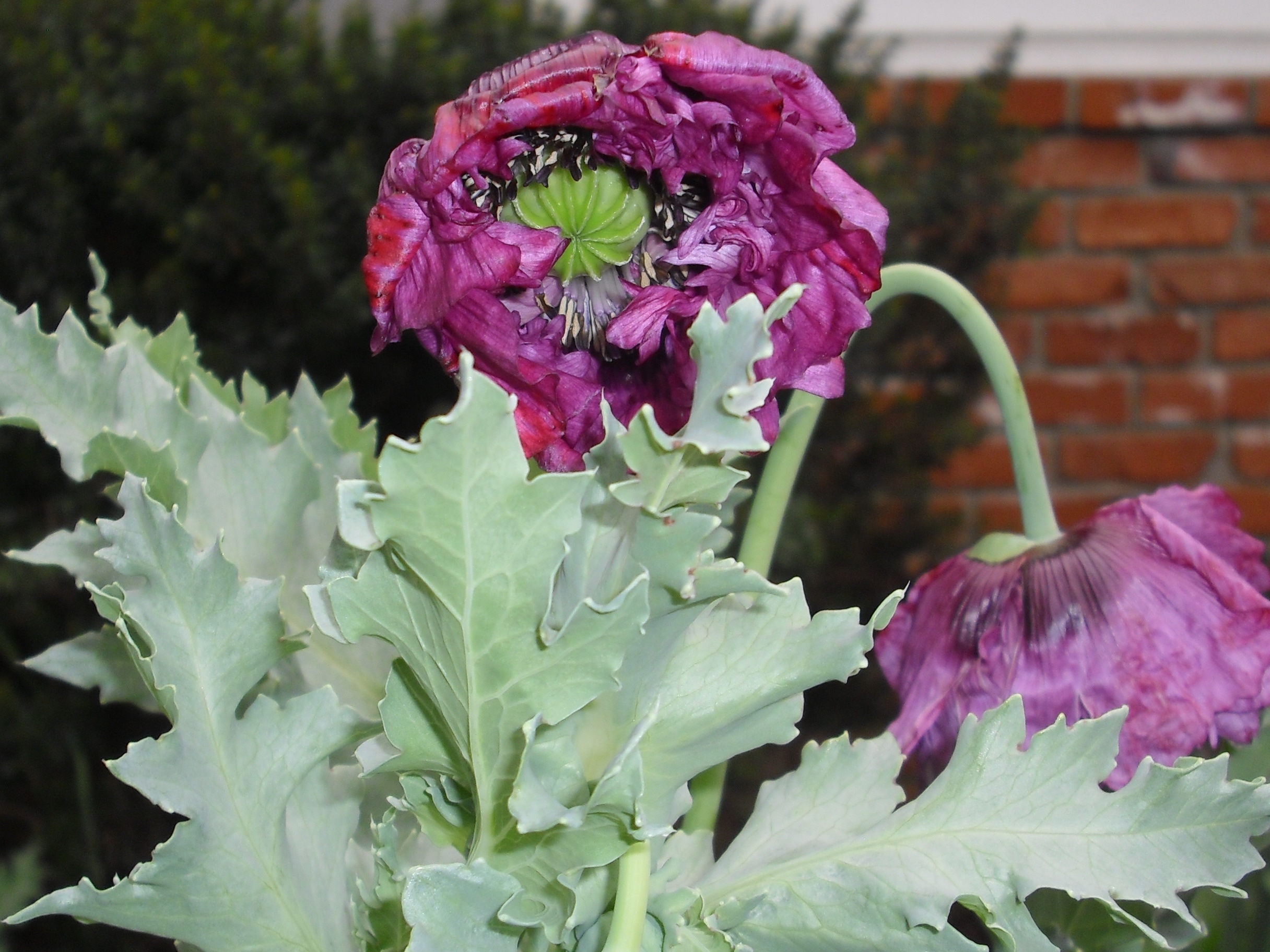
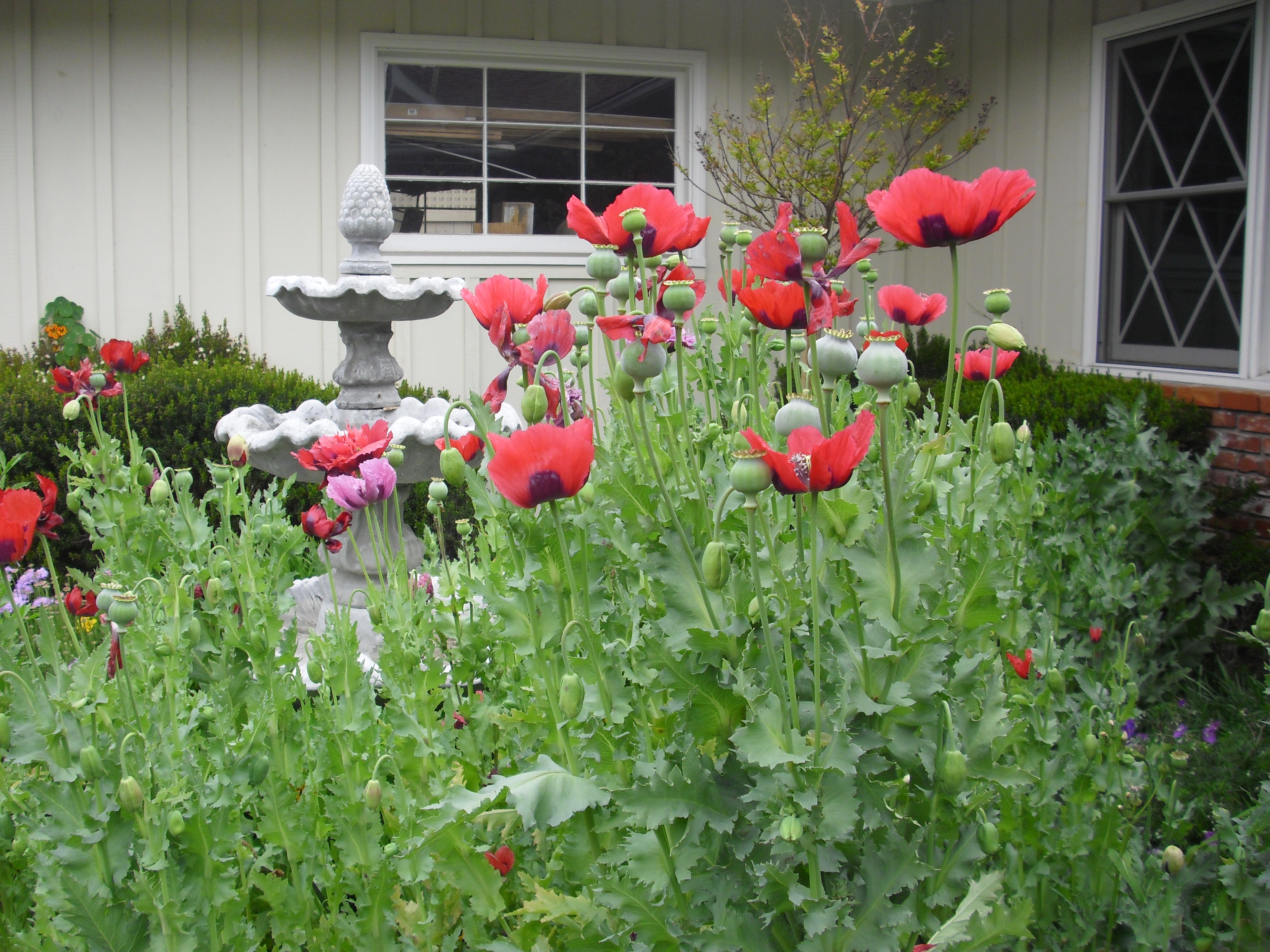
So the poppies grow and mutate each year. There are ruffled ones, purple ones, red ones, red ones with crosses inside. The bees love them and they are filled with humming and buzzing. The thick green stalks grow in cracks and driest soil. They thrive with little water and little care, lending their magic to our yard, making smiles, brining memories, maybe making little gardeners who enchanted by the poppy magic will one day grow them — behind garden walls, of course!
09 Monday Apr 2012
Posted in Uncategorized
Tags
April is here and there is so much going on in the garden. First, the roses — they are about to bloom. Looking at them now, I’m comforted that I did not prune too much. Maybe the first year I pruned the climbers when I shouldn’t have, but every other rose seemed to take the aggressive pruning well. Buds are everywhere waiting to bloom. I cut my first rose on Easter morning.
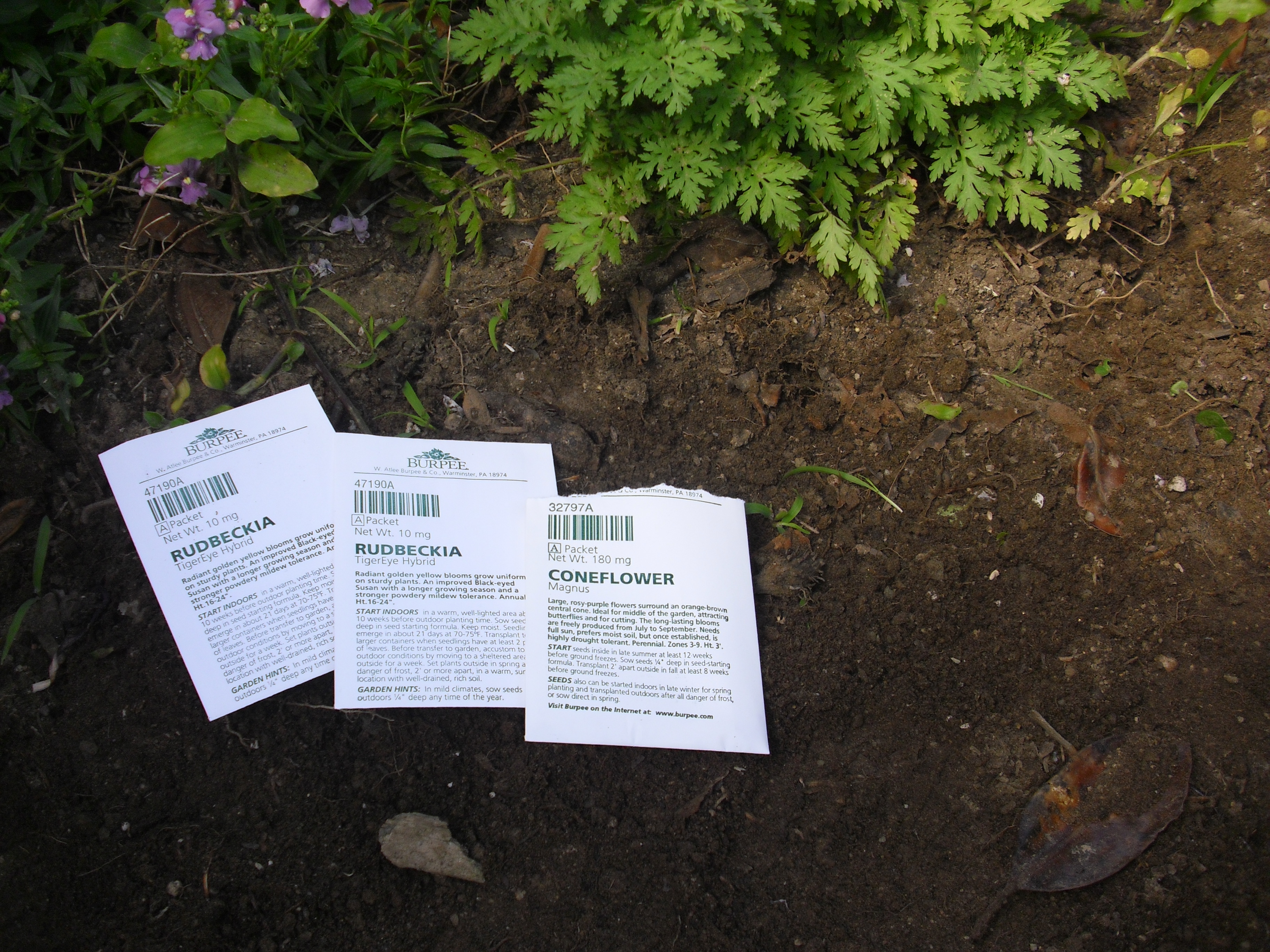
The second news is somewhat disappointing but not uncommon to my garden—I dug up my seed nursery. Well now, what can I say? It had originally been the home of a nice fat Erysimum Bowles (mauve) that died. When it did, it left me with a garden hole, not one you could see, but one that was sheltered and became my “nursery” where many plants such as this nemesia self-sowed. But I dug it up and planted a new Erysimum Bowles “Mauve”, popularly called wallflower, and now, who knows. The Rudebekia seeds were so tiny. I’m sure they are buried under too much dirt now. But at least, I had a “control” set in peat pots along with some Coneflowers. There are a few tiny sprouts now.
The Erysimum Bowles, by the way, is a great perennial. It takes little water, grows in a nice even mound, blooms almost continuously. The only complaint I have is that a few of mine have bloomed themselves out of existence after a few years. They grew woody and split open, which I’ve heard about lavender, but I seem to encounter that more with the wallflower—I read it’s “short-lived” somewhere so maybe this is expected.
I’m also not quite sure how to prune it. Perhaps this leads to the problem above (the splitting open), but the leaves and flowers seem to reside in the outer orb of the plant and when I’ve cut it back, it looks dead so go figure!
Let me know if you have any ideas. I have three in my front garden right now and they do look good against a wall.
09 Monday Apr 2012
Tags

The purple-flowered bush on the right is the one Erysimum.
Posted by ninagarden | Filed under Uncategorized
18 Sunday Mar 2012
Posted in Uncategorized
I planted some seeds about two weeks ago. I put them in my plant “nursery” area where good things seem to come up on their own.
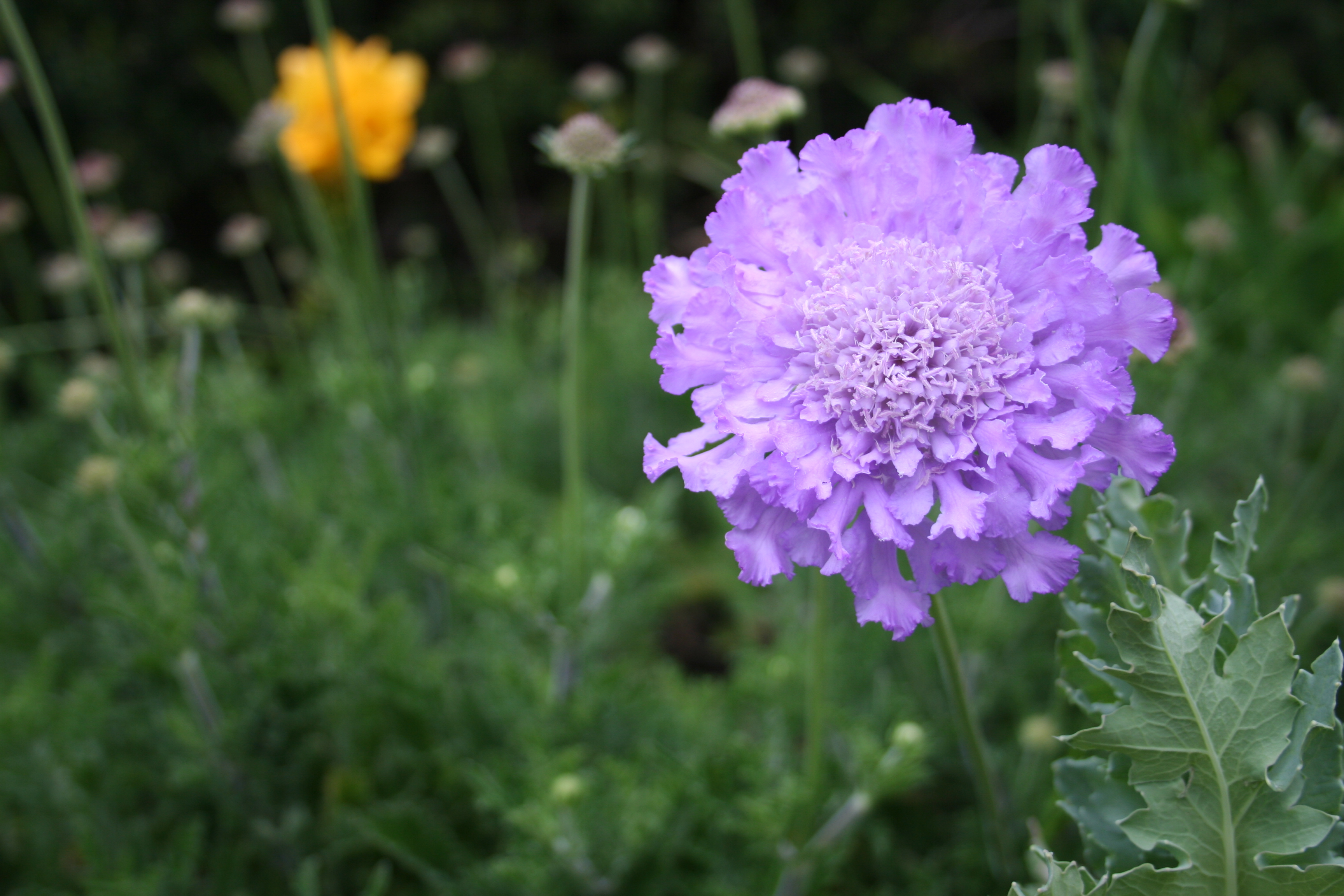
I am going to do an experiment and plant them in seed cups too to see which do better. I want Black Eyed Susans (Rudbeckia, Tiger Eye Hybrid and Indian Summer from Burpee) in August and I’ve only had random success with them in the past. Random meaning I planted several seed packages and got maybe two plants. But they were wonderful plants. Last year, I planted the seeds too and got nothing. They seem tempermental. So this year, I tried again. I planted Coneflowers (Echinacea, Magnus) too since I keep reading about them. I hope my new seeds grow soon. We are having a winter storm today so at least they are getting watered. Here is a nice Scabiosa from my garden.
13 Tuesday Mar 2012
Posted in Uncategorized
Today Annie’s Amazing Nursery catalog arrived and I can’t believe how fabulous it is. I took a pen and circled everything I ever wanted as I flew on the plane to Arizona. Now I am sitting in Silver City, New Mexico and it is snowing, plans for planting summer flowers put on hold as I take in the drastic weather in my parka that I grabbed on my way out the door.
I chased my sister away because she was talking too much as we sit in the Lion’s Den café; she is talking about art and the snow and drinking a tall latte with a tall foam full of fat. She does not like to be silent, especially not on the “day before”– no today we are both chattering away as if we don’t have a care. Tomorrow, we will drive sixty silent miles to visit my Aunt’s house to clean out her closets. Forgive me for not talking of gardens right away as I sit here in a strange coffee house, which the proprietor just told my sister won a Willy Wonka decorating contest, explaining the giant foam peppermints and candy canes hanging from the walls. Forgive me for distractions of chatter.
In my suitcase my Annie’s catalog waits along with my plans for my “fabby” garden that will bloom continually and will never feel snow.
Nope, my garden will fill my thoughts as I lift up the heavy hangers, carrying dry cleaner bags full of carefully ironed clothes out the back door to the car where we will pile them in, armful by armful, trying to be as fast and cheerful as we can and not worry my uncle too much, who stands alone with his dog by the door. The snow left and the sun came out, but still the fields are yellow and the wind blows through my sweatshirt. Our aunt loved flowers. I think of taking a cutting of her geraniums, but I never go in the front door. And would they survive winter outside anyway? If my aunt were here, they would be inside and she would be tending them now, but I don’t see them anywhere so I forget it and concentrate on stuffing the car so full that we will never have to go back again.
No, I will not think of that. I will think about my garden and the blooms that will last all summer. It will be drought-tolerant, deer-tolerant, and ever-blooming. Penstemon barbatus, achillea ageratum, geranium magnificum, and Cynoglossum Amabile “Azul”—I just like the sound of it all, like an incantation, something that’s already alive.
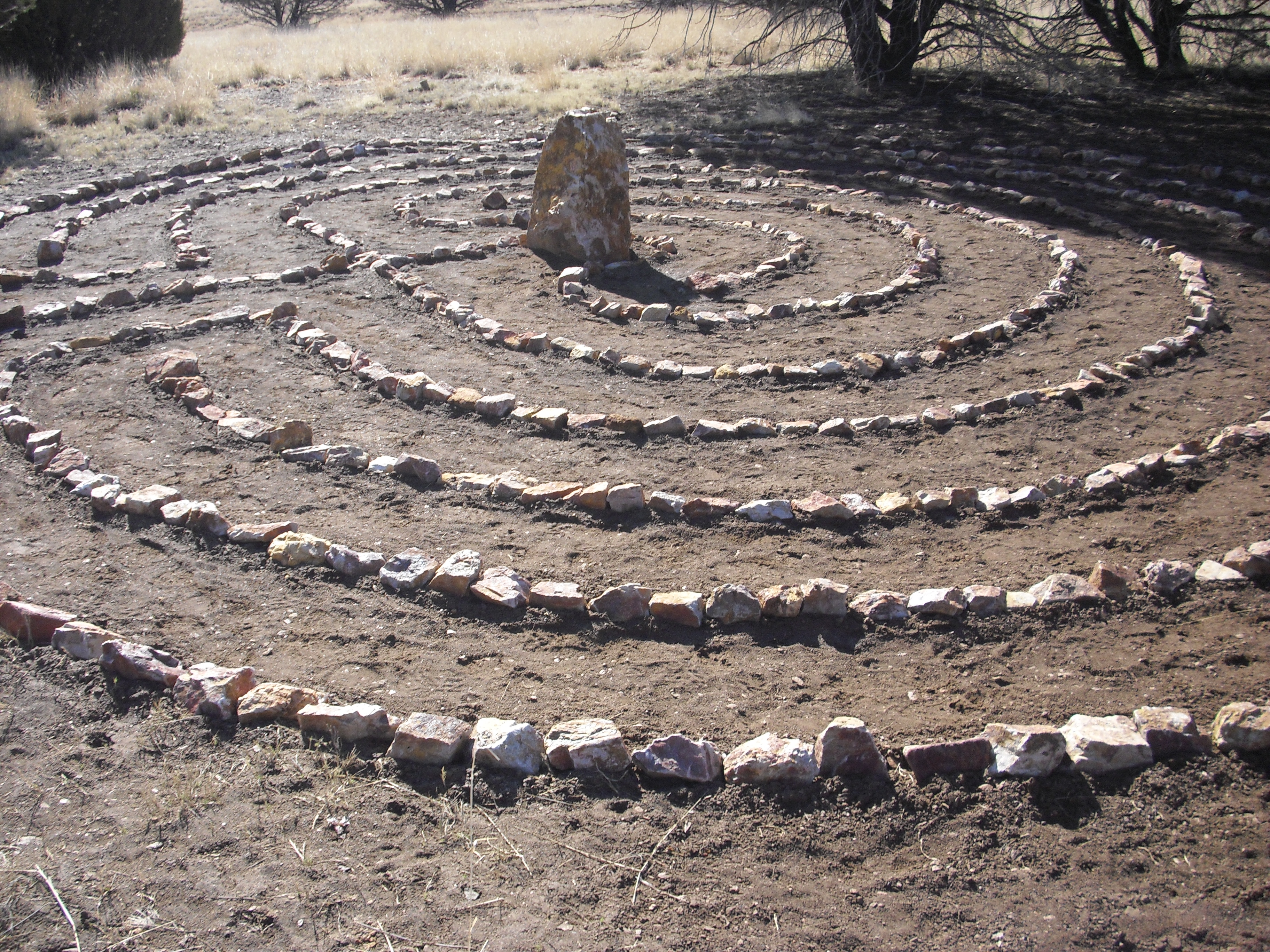
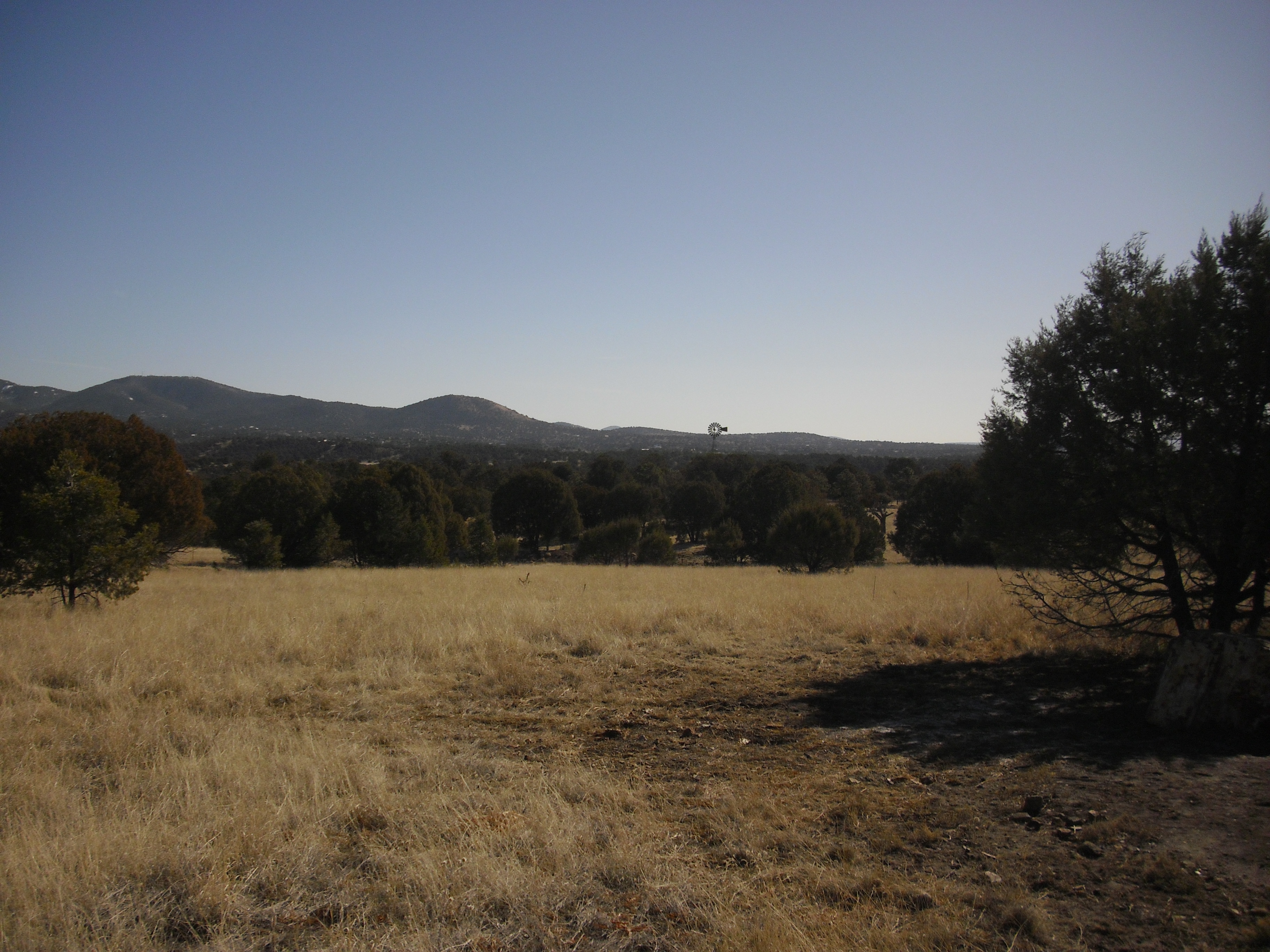
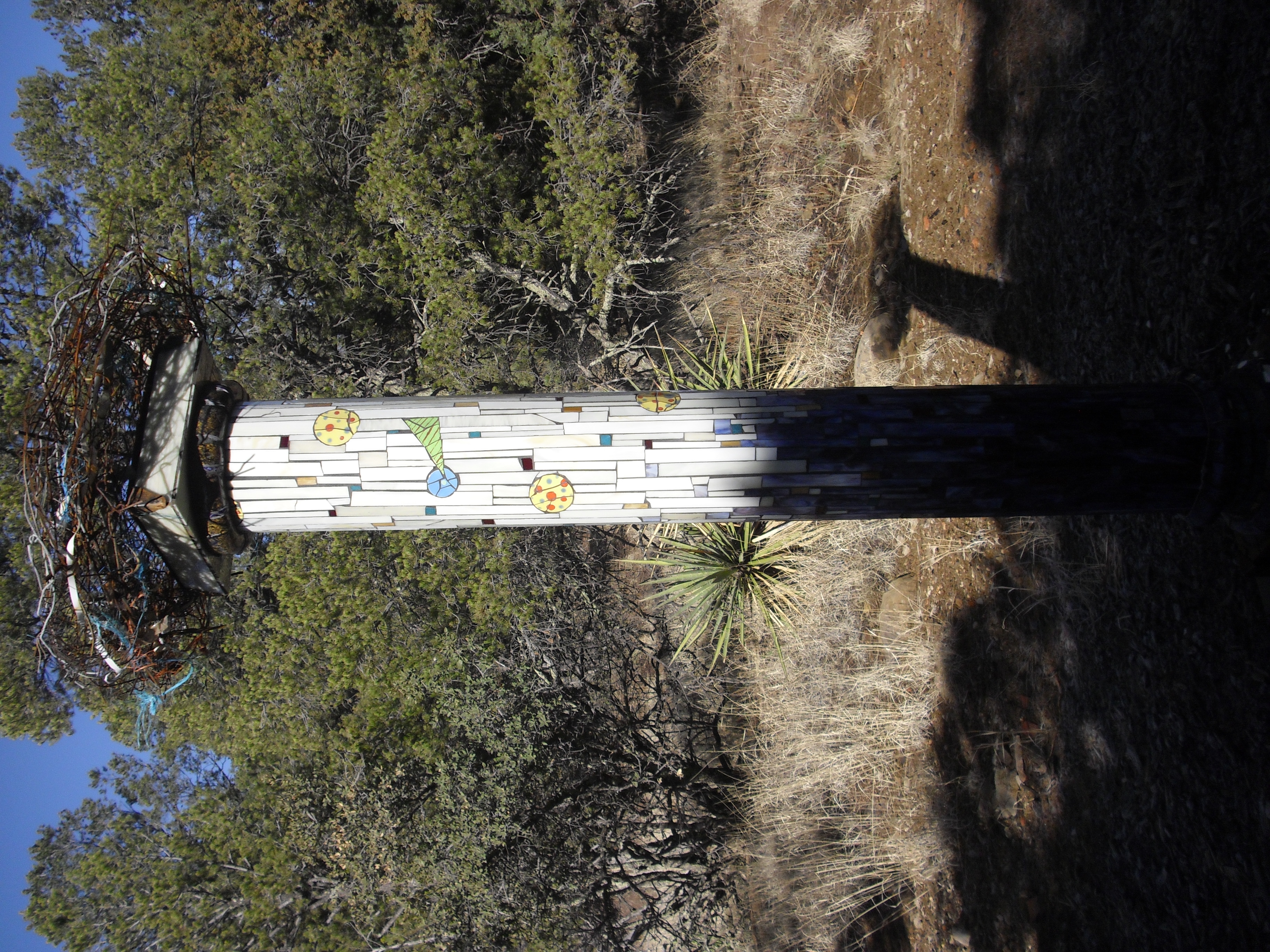
Here are pictures from South western New Mexico the second week of March, day after snow, at Bear Mountain Lodge, the gardens and views from that location.